
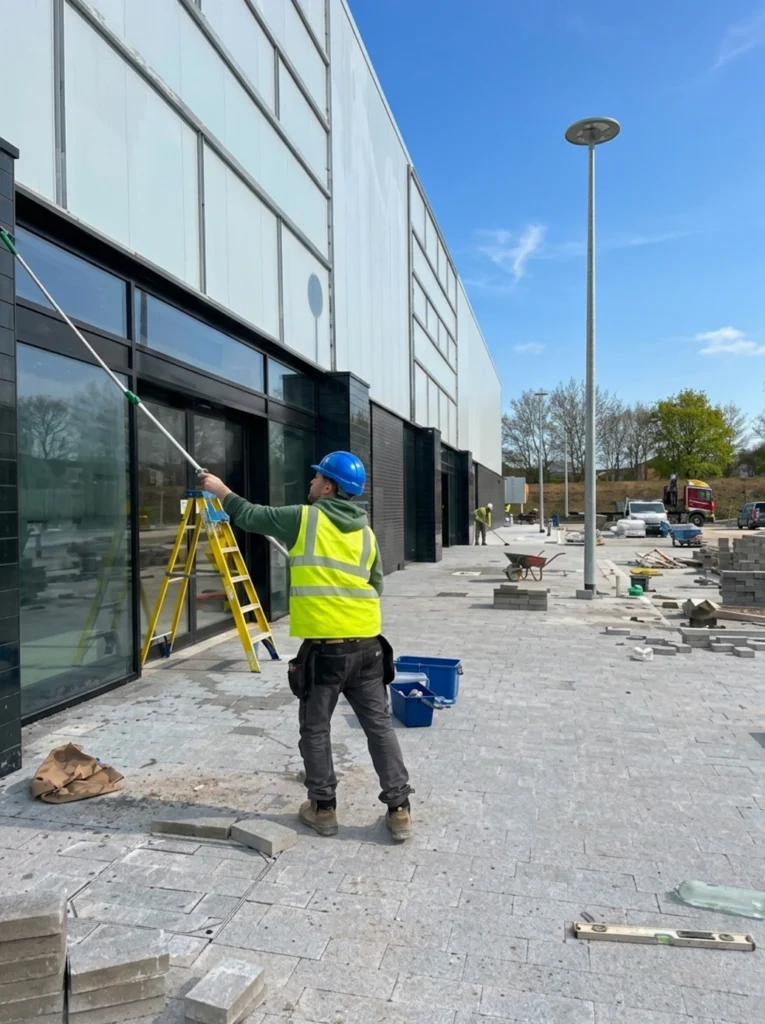
Commercial Exterior Cleaning: Why Summer Is the Right Time to Sort Your Building’s Outside
Most facilities managers spend the summer months focused on what’s happening inside a building. Classroom deep cleans. Kitchen maintenance. Compliance checks. The outside gets noted on a snag list and quietly pushed to autumn.
That’s a costly order of priorities. Summer is the best window in the calendar for commercial exterior cleaning work. Longer days, drier conditions, and buildings that are quieter or fully unoccupied make the logistics easier and the results better.
Cladding, gutters, and external window cleaning tend to get treated as cosmetic. They’re not. Each has a genuine maintenance case, and each gets more expensive the longer it’s left.
Why Exterior Maintenance Gets Skipped
Visibility. That’s the honest answer. A blocked gutter causes damage inside the building long before it shows on the outside. Cladding collecting atmospheric grime over three winters looks fine until it doesn’t. External windows get cleaned last because tenants focus on the offices and corridors they use every day.
Reactive spend on something that could have been maintained affordably is harder to justify than a scheduled programme with predictable costs. The case for exterior maintenance is financial, not aesthetic.
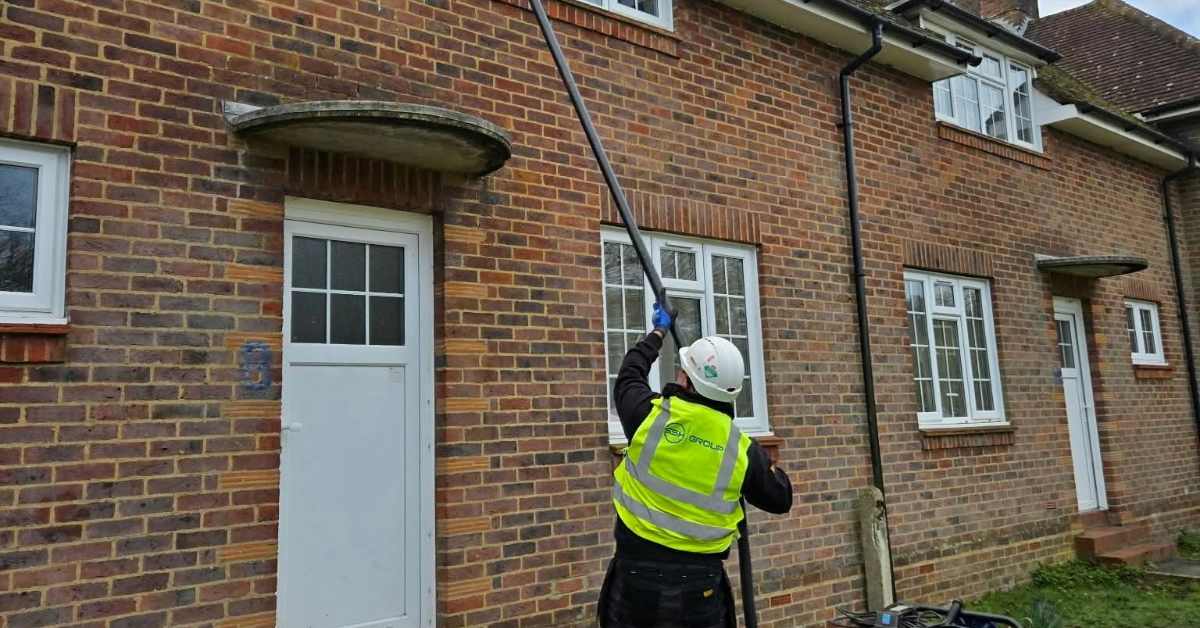
Gutter Clearing: The Quiet Source of Expensive Problems
Blocked gutters are one of the most common and most avoidable sources of building damage in the UK. Water that should be directed away from the structure overflows and finds its way into fascias, walls, and foundations. Research into commercial gutter maintenance suggests repair costs increase by up to 40% when gutters are left unattended for more than twelve months, with surface issues progressing into structural repairs.
Summer is the right time to act for two reasons. The spring months deposit significant debris into gutter systems: blossom, seed pods, and leaf matter that winter rain never cleared. Left over summer, that material compacts and blocks downpipes. Dry weather also makes inspection and clearing far more thorough, and any minor repairs can be actioned while site access is straightforward.
Commercial buildings with flat roofs need particular attention. Standing water from a blocked outlet causes far more structural stress than most people expect. A gutter clear booked in June or July catches the problem before the first autumn downpour turns it into an emergency callout.
Cladding and Window Cleaning: More Than a Cosmetic Job
What happens to cladding over a British winter
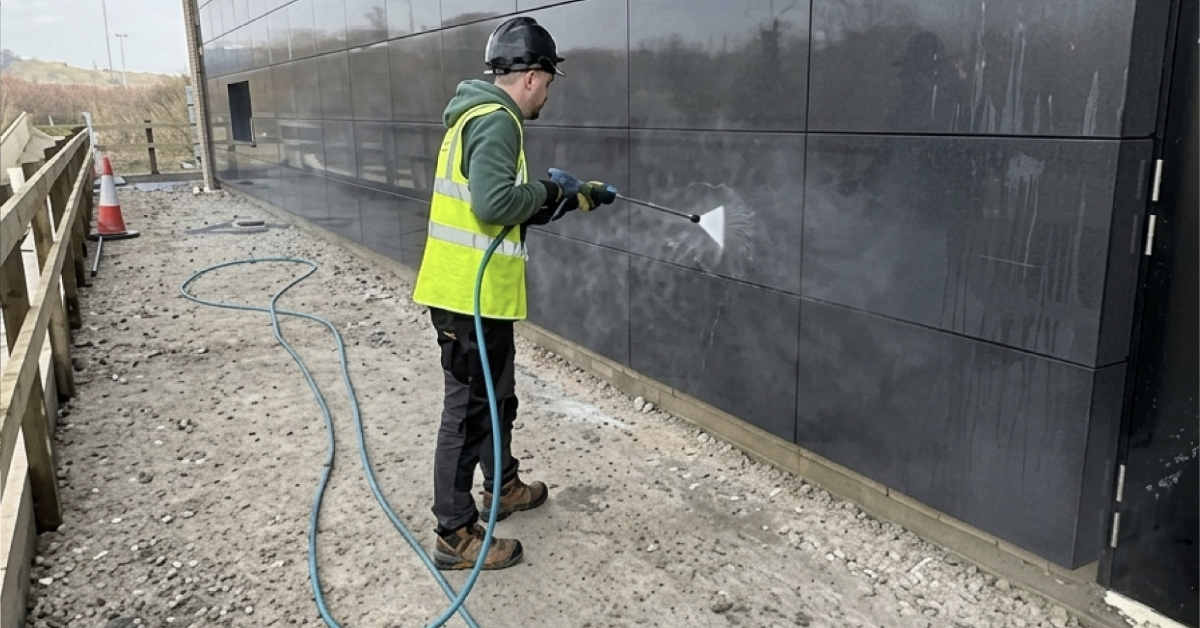
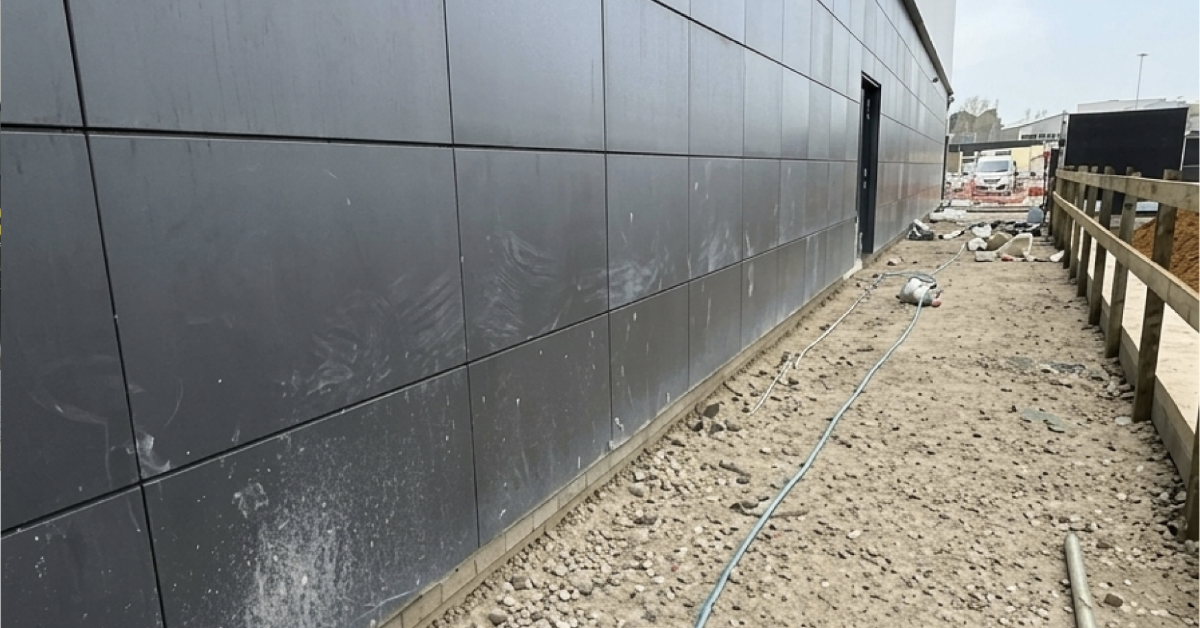
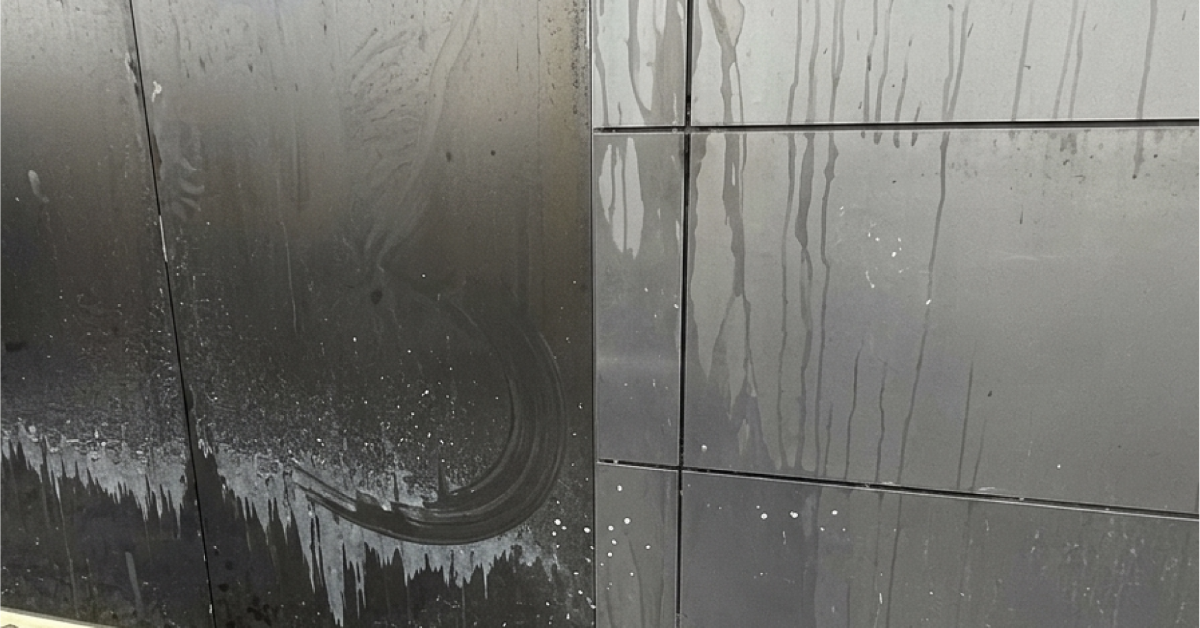
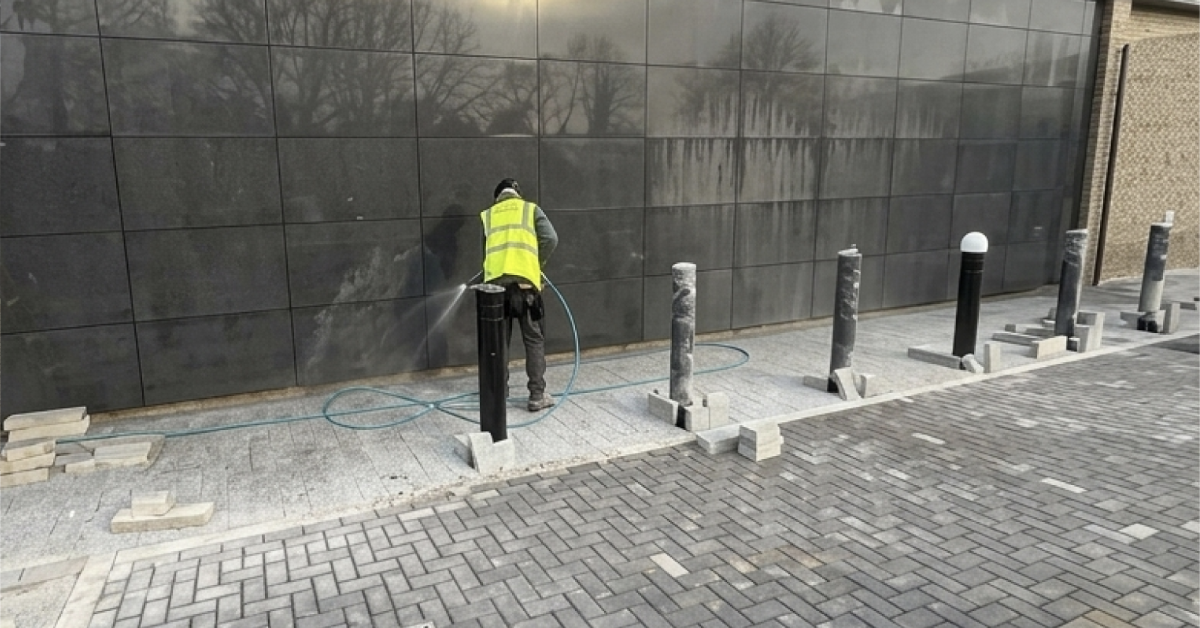
Metal, composite, and uPVC cladding all accumulate the same combination of grime through autumn and winter: atmospheric pollution, biological growth including algae and moss, and the particular grey-black residue that builds up on north and west-facing elevations. By the time spring arrives, most commercial buildings have exterior surfaces that have had six months of weathering with no intervention.
The case for regular cladding maintenance goes beyond appearance. Organic growth traps moisture against surface coatings. That moisture causes corrosion on metal panels, surface breakdown on composite materials, and staining that becomes increasingly difficult to shift. A clean that would have taken a morning in June becomes a restoration job in October.
Summer gives you stable conditions for access equipment and the dry surface contact that specialist cleaning solutions need. High winds and wet weather affect results on high-level work. A June or July booking gets the job done properly, with scaffolding or MEWP access planned without weather risk.
External window cleaning as part of a maintenance programme
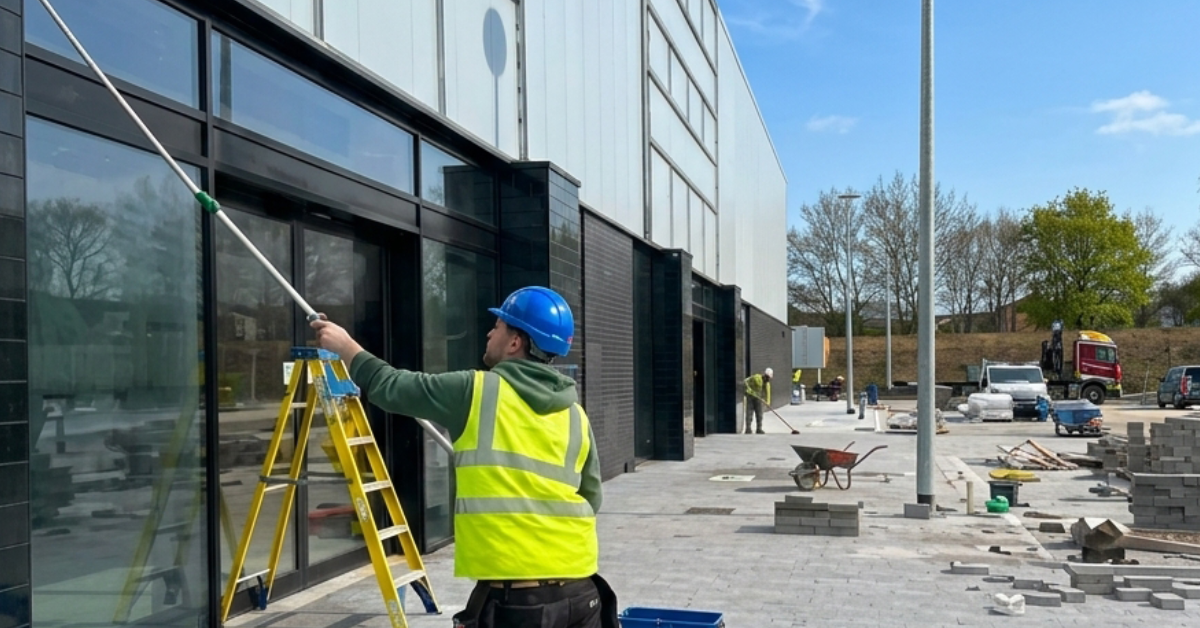
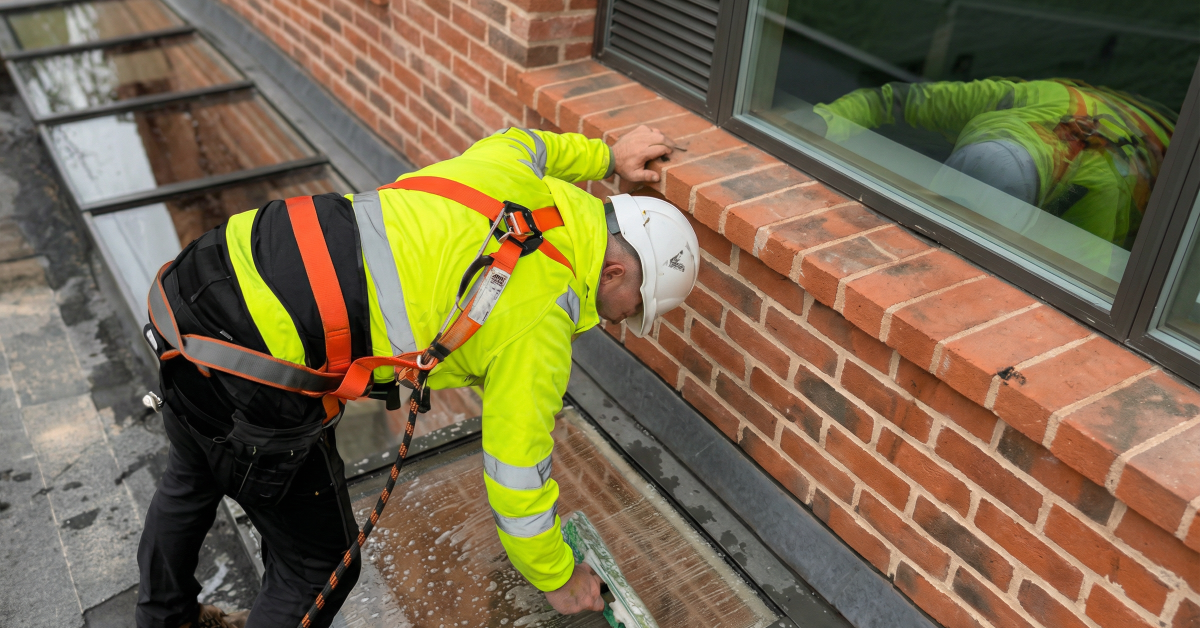
External windows on commercial buildings get cleaned far less often than interior spaces, and far less often than the building’s occupants assume. Multi-storey office blocks, education buildings, and healthcare facilities all accumulate atmospheric residue on glazing that becomes harder to shift the longer it sits.
Summer works for the same reasons as cladding. The building looks better for the rest of the year. Seal failures or glazing issues become visible during the clean and can be reported for repair. The work happens during the period with the least disruption to building users.
For education sites, the summer holiday window is often the only realistic time to clean external glazing properly. Access equipment parked next to a teaching block during term time creates H&S complications that a six-week break removes entirely. Schools and academy trusts that plan this work for July get it done. Those that leave it until September find the calendar already full of other remedial work.
The Practical Case for Combining Exterior Work
The most common mistake with exterior maintenance is treating each job as a separate procurement decision. Gutter clearing goes to one contractor. Window cleaning to another. Cladding, if it happens at all, waits for a separate tender.
That creates multiple sets of access logistics, insurance checks, and separate days of disruption. For an estates manager with several buildings to oversee, it’s an overhead that serves nobody.
A single commercial exterior cleaning programme covering all three areas in one mobilisation reduces cost per visit and keeps disruption to a single period. One contractor, one visit, one invoice.
The SSH Group works across both cleaning and building maintenance from the same office. SSH Cleaning handles exterior window cleaning and cladding, while SSH Building coordinates the gutter clear and any repairs that come out of the inspection. One call sorts it.
What to Include in a Summer Exterior Maintenance Programme
The scope varies by building type, but the core elements for a commercial exterior cleaning programme in the UK are:
- Gutter clearing and downpipe flushing, with a condition report on fixings and fascias
- Cladding clean using the correct method for the surface material, covering all elevations
- External window cleaning, including frames and sills where access allows
- Inspection of any areas flagged during the works for follow-up building maintenance
For multi-site estates managers, this programme can be batched across a trust or portfolio, with a single mobilisation covering several buildings on consecutive days. That’s how the cost per building drops significantly compared to booking each site individually.
The Timing Question: When in Summer?
June is typically the best month to book. The weather is consistently dry enough for access equipment and surface treatments, education sites are still predictable before the school calendar breaks up, and contractors have availability before the autumn rush starts.
July works well for education sites once schools are empty. August fills quickly once facilities managers who left things late try to get everything done before September.
If your building’s exterior has not been part of a commercial exterior cleaning programme this year, get it booked now. The weather will turn, availability will tighten, and dealing with deterioration in January always costs more than dealing with it in June.
Speak to SSH Cleaning about exterior window cleaning and cladding, SSH Building about gutter clearing and follow-up building maintenance, or contact The SSH Group directly to discuss a combined commercial exterior cleaning programme for your site.