
High-Level Maintenance: Cladding and Window Restoration for Industrial Site
Introduction
Industrial sites are built for performance, not presentation.
But over time, external surfaces tell a different story.
Windows become obscured by grime, cladding deteriorates under environmental exposure, and access challenges delay routine maintenance. What begins as a visibility issue often escalates into a compliance, safety, and cost problem.
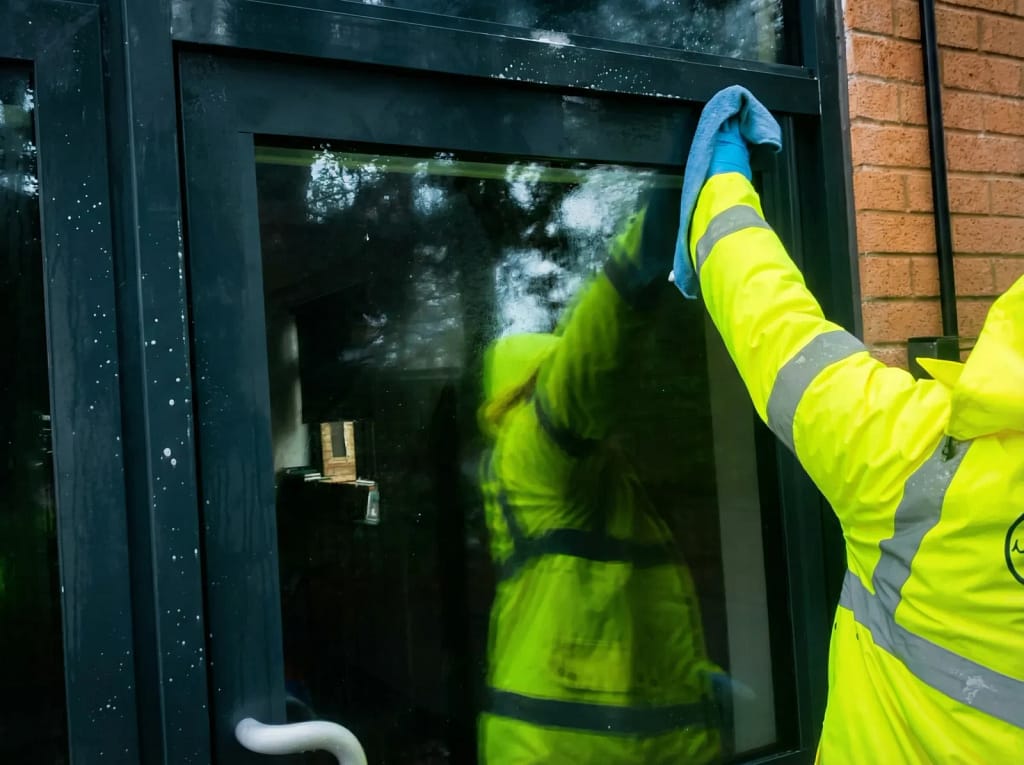
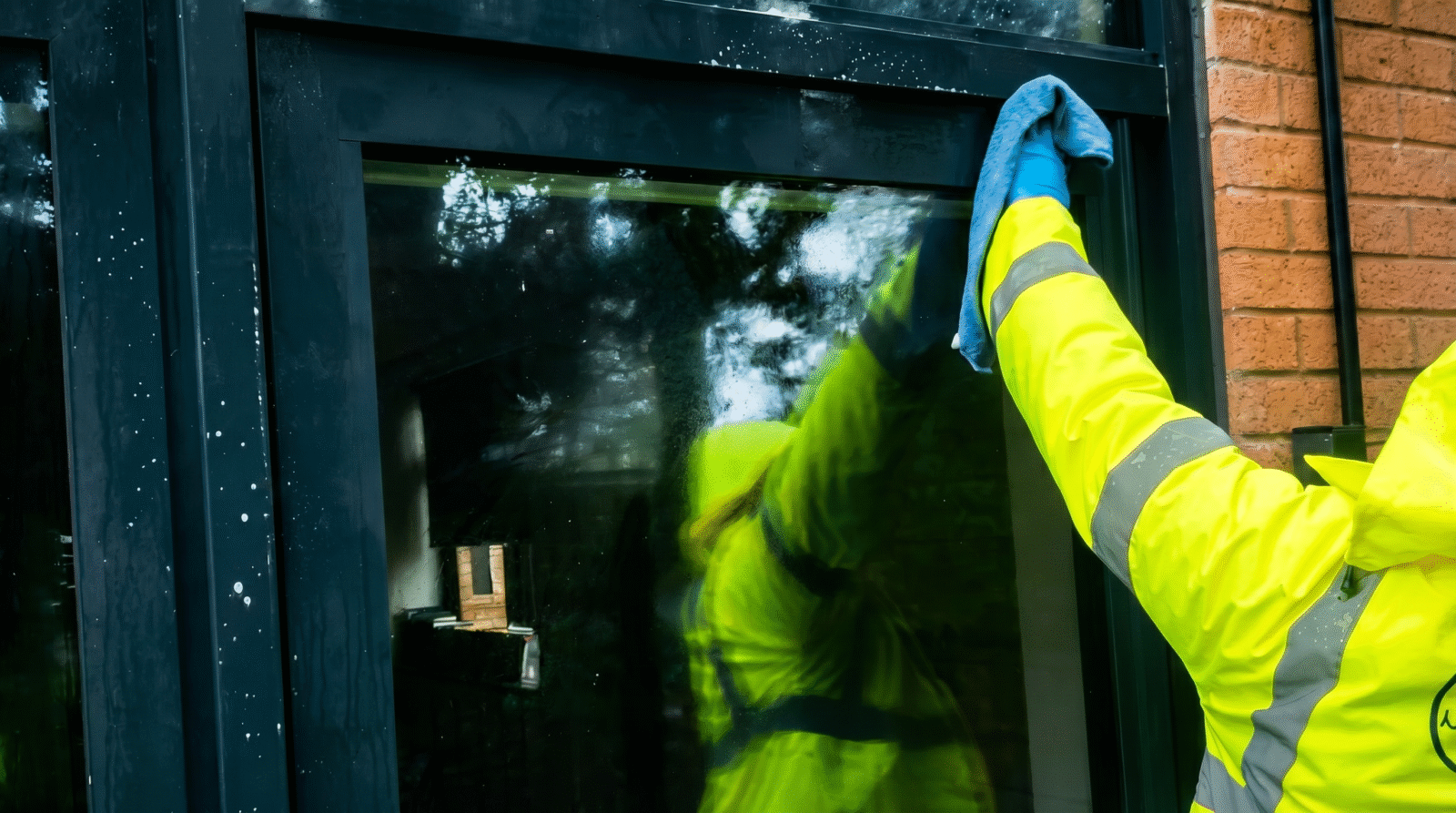
Commercial window cleaning at height, combined with cladding restoration, is not just a visual upgrade. It is a critical part of maintaining operational efficiency, protecting assets, and reducing long-term Reactive Building Maintenance costs.
Key Takeaways
- Commercial window cleaning improves safety, visibility, and asset longevity
- High-level cladding maintenance prevents material degradation
- Planned maintenance reduces reliance on Reactive Building Maintenance
- Industrial sites require specialist access and compliance-led delivery
- Integrating cleaning into Facilities Management Services improves ROI
Why High-Level Maintenance Matters on Industrial Sites
Industrial environments present a unique set of challenges:
- Large surface areas
- Difficult access points
- Exposure to pollutants, dust, and weather
- Continuous operational activity
As a result, external cleaning is often deprioritised.
However, neglecting high-level surfaces creates three key risks.
Reduced Visibility and Safety
Dirty or obstructed windows impact natural light and visibility, particularly in:
- Warehouses
- Manufacturing facilities
- Distribution centres
This can affect working conditions and increase reliance on artificial lighting.
Accelerated Material Degradation
Cladding systems are exposed to:
- Industrial emissions
- Airborne contaminants
- Moisture and organic growth
Without regular cleaning, these factors begin to degrade protective coatings and structural integrity.
Increased Maintenance Costs
When cleaning is delayed, minor issues escalate into:
- Surface restoration works
- Coating repairs
- Full panel replacements
At this stage, costs move from planned maintenance into Reactive Building Maintenance.
Commercial Window Cleaning as a Strategic Asset Protection Tool
Commercial window cleaning is often viewed as a routine service.
In reality, it plays a strategic role in asset protection.
1. Preventing Long-Term Damage
Regular cleaning removes contaminants before they can bond to surfaces.
This helps prevent:
- Glass staining
- Frame corrosion
- Seal deterioration
Over time, this extends the lifespan of both glazing and surrounding materials.
2. Supporting Compliance and Inspections
Clean, well-maintained external surfaces support:
- Health and safety inspections
- Site audits
- Client and stakeholder visits
For industrial operators, this contributes to overall compliance readiness.
3. Enhancing Operational Efficiency
Improved natural light reduces energy consumption and creates better working conditions.
While often overlooked, this has a measurable impact across large facilities.
Cladding Restoration: More Than Surface-Level Cleaning
Cladding restoration goes beyond basic cleaning.
It involves:
- Removing embedded contaminants
- Treating organic growth
- Restoring surface appearance and performance
When Is Restoration Required
Restoration is typically needed when:
- Staining has penetrated the surface
- Coatings have begun to break down
- Standard cleaning methods are no longer effective
The Cost of Delay
Delaying restoration leads to:
- Increased repair costs
- Reduced material lifespan
- Greater disruption during remedial works
A proactive approach avoids escalation and maintains asset value.
The Role of Post-Construction Cleaning Services
Industrial sites frequently undergo:
- Extensions
- Refurbishments
- Equipment upgrades
These projects leave behind:
- Dust and debris
- Residue on windows and cladding
- Contaminants that affect surface performance
Post Construction Cleaning Services ensure that:
- Surfaces are handed over in optimal condition
- Protective finishes are preserved
- The site is ready for immediate operation
Without this step, newly installed materials can begin deteriorating from day one.
Integrating High-Level Cleaning into Facilities Management Services
The most effective approach is not reactive.
It is structured.
Commercial window cleaning and cladding maintenance should be embedded within wider Facilities Management Services.
This includes:
- Scheduled external cleaning programmes
- Planned preventative maintenance (PPM)
- Reactive Building Maintenance support
- Compliance-led inspections
Why Integration Matters
Facilities teams are often managing multiple priorities across multiple sites.
By integrating high-level cleaning into a structured plan:
- Maintenance becomes predictable
- Costs are controlled
- Emergency interventions are reduced
This aligns with the broader objective of reducing operational risk.
Access, Safety, and Specialist Delivery
High-level maintenance on industrial sites is not straightforward.
It requires:
- Specialist access equipment (MEWPs, rope access, etc.)
- Trained operatives
- Strict adherence to health and safety protocols
Poorly executed cleaning can create more risk than it resolves.
This is why delivery must be:
- Method-led
- Risk-assessed
- Aligned with site operations
For facilities and operations managers, the priority is not just getting the job done, but getting it done safely and efficiently.
Reactive Building Maintenance vs Planned High-Level Cleaning
Many industrial sites rely on Reactive Building Maintenance.
This creates a cycle of:
- Issue → response → repair → repeat
High-level cleaning breaks that cycle.
By maintaining windows and cladding proactively:
- Issues are identified early
- Surfaces remain protected
- Costs are reduced over time
This is particularly important for large-scale industrial assets, where even minor issues can escalate quickly.
A Practical Approach to Implementation
For industrial sites looking to improve external maintenance, the process should be simple.
Step 1: Site Assessment
Evaluate:
- Surface condition
- Access requirements
- Risk factors
Step 2: Define a Cleaning Strategy
Determine:
- Frequency of commercial window cleaning
- Cladding maintenance requirements
- Integration with existing Facilities Management Services
Step 3: Align with Operational Schedules
Plan works around:
- Production cycles
- Site access restrictions
- Safety requirements
Step 4: Monitor and Review
Track:
- Surface condition over time
- Maintenance costs
- Frequency of reactive works
This creates a data-led approach to asset management.
Conclusion
Commercial window cleaning and cladding restoration are not secondary considerations.
They are core components of industrial asset management.
When approached strategically, they:
- Protect materials
- Reduce Reactive Building Maintenance
- Improve operational efficiency
- Support compliance and safety
The difference comes down to approach.
Reactive cleaning addresses problems after they appear.
Planned high-level maintenance prevents them altogether.